Reading Nice before reading the answer
I work where city knowledge meets AI visibility: the phrasing, evidence and source-of-truth pages that help answer engines describe a Nice business with precision instead of Riviera fog. The work starts with the way people name a district, walk from a tram stop, compare a sea view, or switch languages before they book, call or visit.
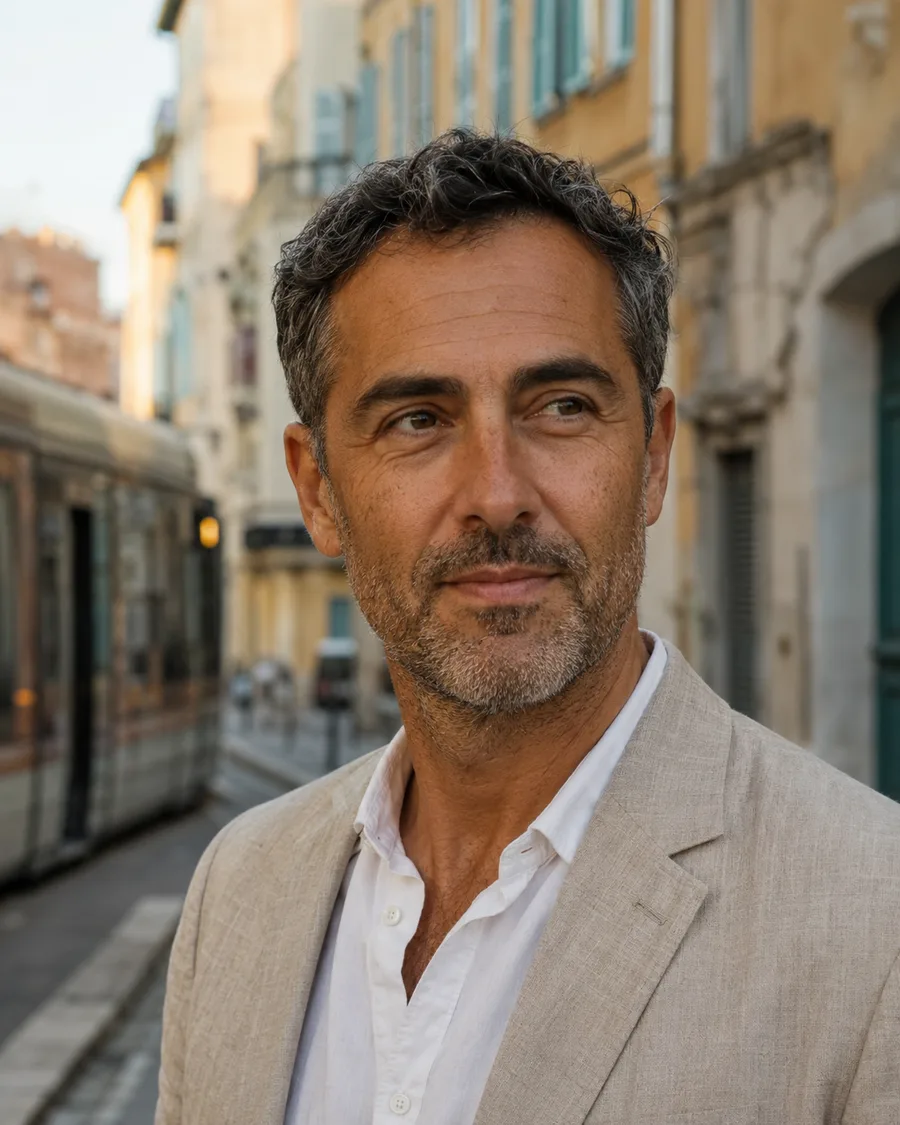
If the city fact is missing, the AI answer will borrow a prettier one from somewhere else.
At the Jean Médecin tram stop, I have watched four maps of Nice pass through the same crossing. A local says “en ville” and means errands, offices, a practical centre. A British guest says “near the old town” and may accept a walk from the station if the luggage is light. An Italian weekender asks about the Promenade, but sometimes means a dinner route, sometimes a beach morning, sometimes a postcard. A property buyer can say “quiet and central” while actually picturing Cimiez, Mont Boron, or a balcony above the city where the bus timetable suddenly matters.
I was born inland from the coast, close enough to feel the pull of Nice but far enough to notice the performance of it: the way the sea flattens every description, the way a slope changes a ten-minute walk, the way August makes weak wording show its bones. Before building this site, I worked on multilingual tourism copy, local search cleanup, rental listing audits, small hotel positioning and property-buyer information packs. That work taught me that Nice is rarely one market. It is French families comparing school breaks, Italian visitors arriving with a different sense of distance, British and American travellers using landmark names loosely, clinic patients needing calm and access, and buyers who confuse “Côte d’Azur” with a single neighbourhood.
My strongest habit now is looking for the missing word that makes an AI answer less lazy: seasonal, owner-run, medical-adjacent, near Nice-Ville, sea-facing, hillside, direct booking, French-speaking, Italian-friendly, not Monaco, not Cannes, not generic Riviera. I keep three-language query cards because the same street changes character when it is asked in French, English or Italian. AI visibility, to me, is not a decorative layer on top of SEO. It is the discipline of making a business fact meet a city fact, then proving that connection clearly enough that an answer engine has less room to improvise.
Path into the niche
- 2008
Tourism copy across languages
Started writing and adapting visitor-facing copy for small Riviera businesses that needed English and French to carry the same practical detail.
- 2012–2015
Local search cleanup work
Audited listings, categories, map descriptions and duplicated place information for hotels, rentals and service businesses around Nice.
- 2016–2019
Rental and hotel positioning
Helped owners explain seasonality, access, amenities and neighbourhood differences without turning every offer into the same Promenade cliché.
- 2020–2022
Property-buyer information packs
Built plain-English and French notes for buyers trying to understand districts, slopes, transport, price logic and local vocabulary.
- 2023
AI answer visibility focus
Shifted the same city-reading method toward ChatGPT-style answers, entity stability, citation likelihood and multilingual query behaviour.
Bring me the place detail that keeps getting lost.
I will help turn it into clear AI-readable signals across your pages, listings, FAQs and booking paths.
Discuss the audit